Powered by Cortical Labs CL1
Artificial Biological Intelligence.
Trade beyond silicon.
NeuralHFT encodes live market signals into electrical stimulation patterns, letting real biological neurons on Cortical Labs' CL1 generate adaptive trading decisions in closed-loop at sub-millisecond latency.
What we're building
Neurons meet markets.
Cortical Labs' CL1 houses real, living human neurons grown on a microelectrode array. We stimulate them with encoded price and momentum data and read back their spike patterns as trading signals — in a closed loop running at up to 25,000 Hz.
Unlike traditional ML, the neurons adapt through biological plasticity — no backpropagation, no retraining, no GPU compute. The system learns on the fly as market regimes shift, producing entry and exit signals from emergent spike activity alone.
- Mark-to-Market P&L
- +$0.65
- Ticks Simulated
- 6,000+
- Closed-Loop Latency
- <1 ms
- Sharpe Ratio (sim)
- 2.1
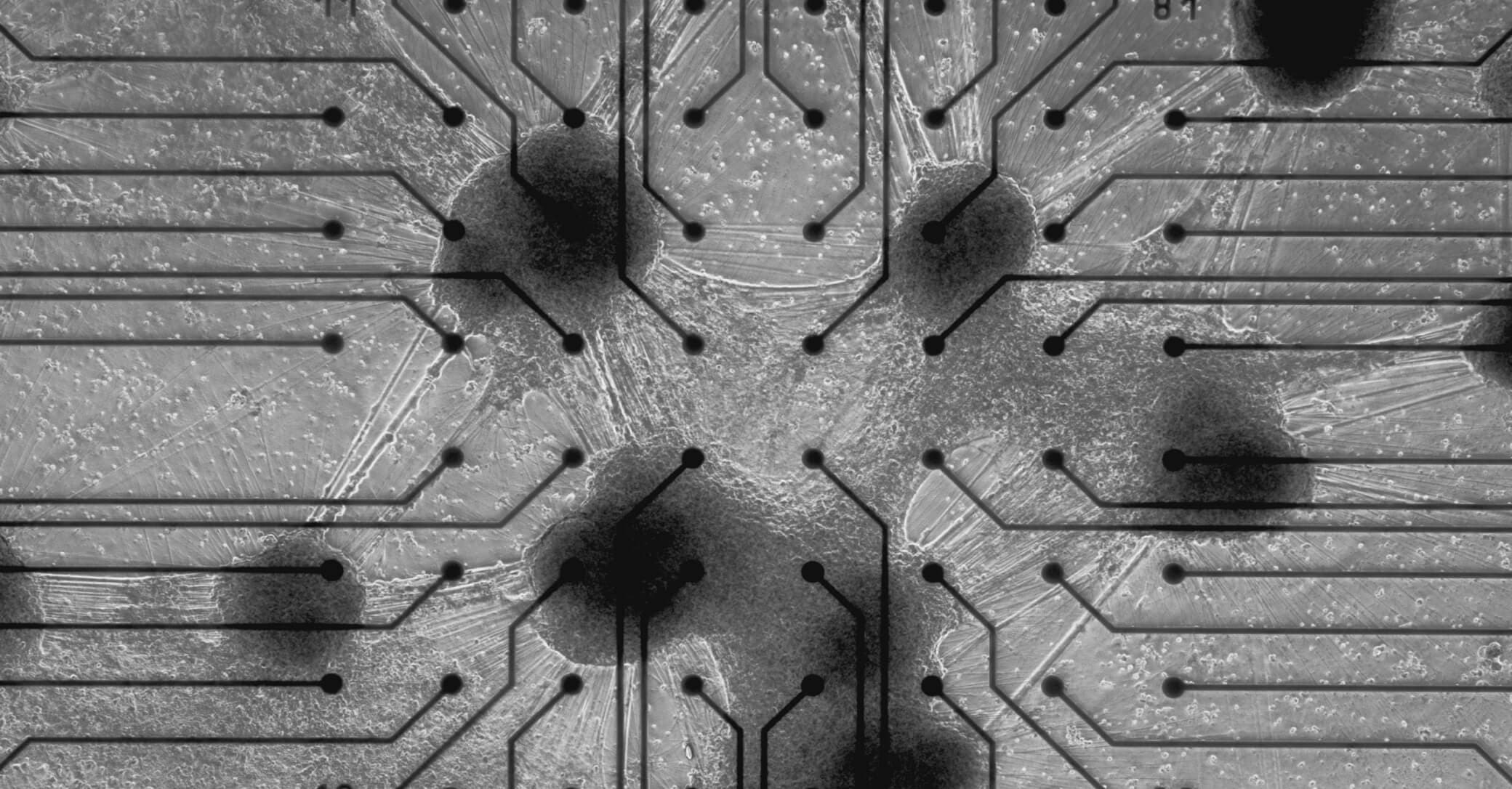
Human neurons cultured on a 64-electrode MEA inside the Cortical Labs CL1 — the compute substrate behind NeuralHFT.
Simulation results
Early results from the CL SDK simulator.
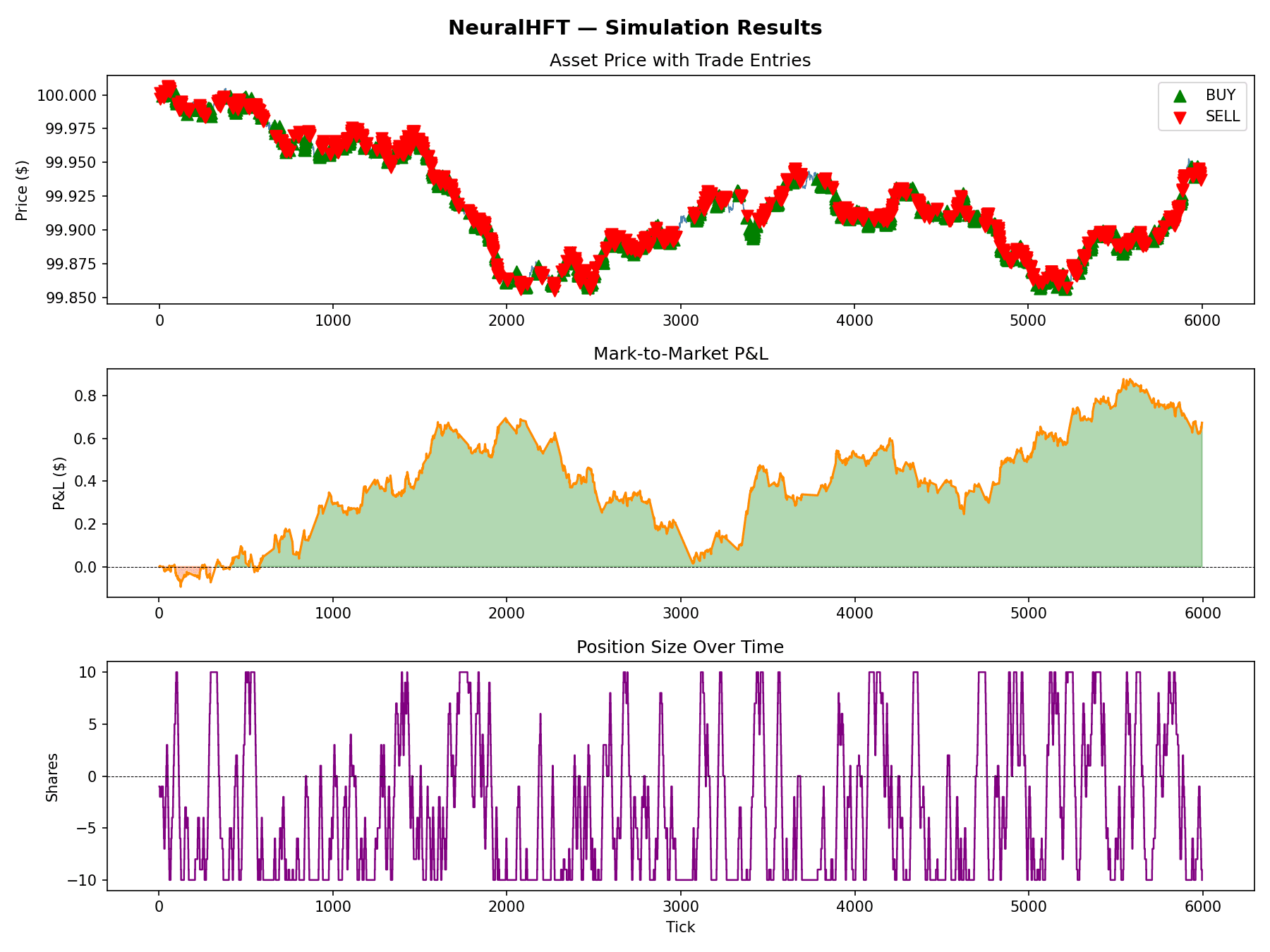
CL SDK Simulator — 6,000 ticks · accelerated time mode · Poisson-distributed spike generation
The hardware
Meet the CL1.
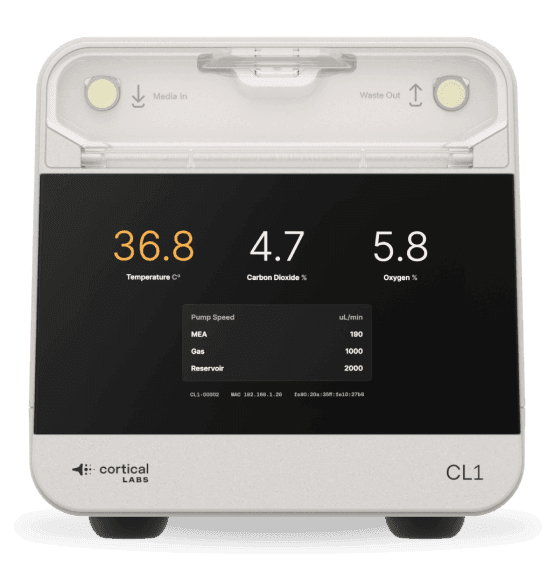
Cortical Labs' CL1 is the world's first commercial biological intelligence system. It integrates living human neurons with silicon computing in a single, lab-ready device — the physical substrate powering every NeuralHFT trade decision.
- —64-electrode microelectrode array
- —25,000 Hz closed-loop sampling rate
- —Real-time bidirectional stimulation & recording
How it works
Three layers of biological advantage.
Biological Compute
Real neurons on a 64-electrode MEA process market signals through learned spike patterns — no gradient descent, no retraining cycles.
Sub-ms Closed Loop
The CL1 samples every electrode at 25,000 Hz. Stimulate, observe, decide — the entire feedback loop completes in under a millisecond.
Adaptive Signal Processing
Neurons develop plastic responses to shifting market regimes without retraining. Position sizing and entry signals emerge directly from spike activity.